Electric vehicles (EVs) are becoming more common on roads across the UK and beyond, with many drivers now seeking practical, eco-friendly transport options. One of the biggest questions new EV owners have is: how do EV charging stations work? In this blog post, the experts at Your Electrical Safety break down everything you need to know about EV chargers, from how they operate to the different types and how to install one safely.
What is an EV charging station?
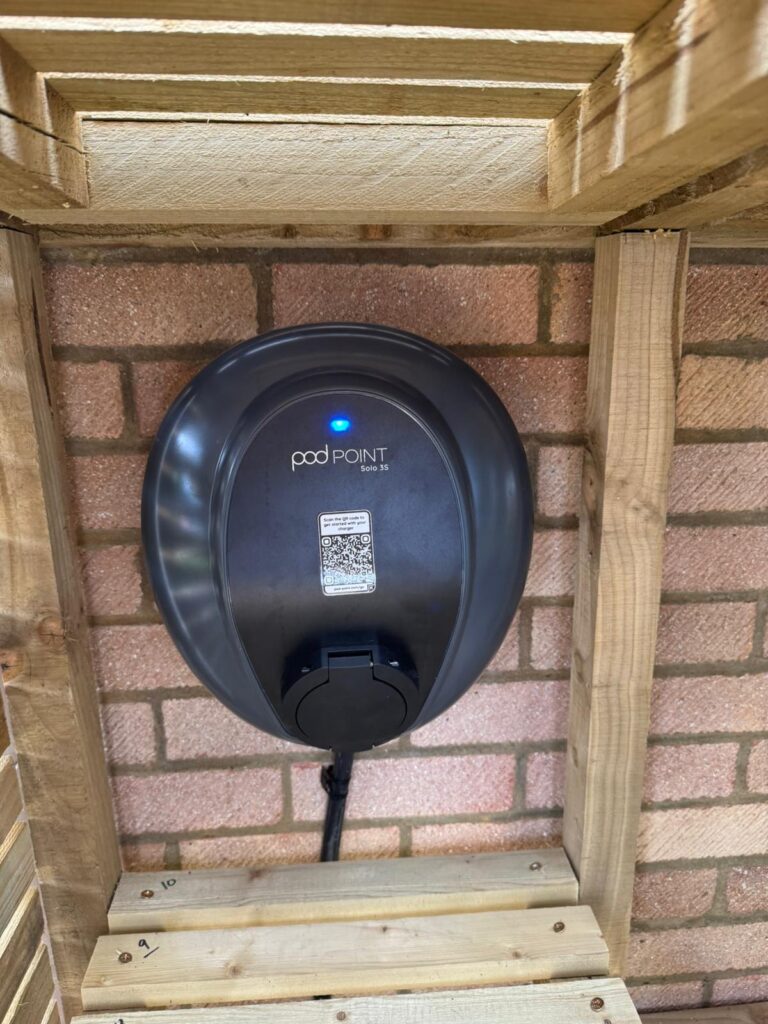
An EV charging station, also known as an EVSE (Electric Vehicle Supply Equipment), is the essential link between an electric vehicle and the electrical grid. It provides a safe and controlled way to deliver electricity to an EV’s battery.
So, how do EV charging stations work? Simply put, they convert grid-supplied electricity into a form your car can store and use. Charging stations monitor voltage, current, and temperature to ensure safe and efficient charging for the user and the vehicle.
The types of EV charging stations
There are three main types of EV charging stations: Level 1, Level 2, and DC fast charging.
- Level 1 Charging: This is the slowest option, using a standard 120V household outlet. It delivers roughly 3-5 miles of range per hour of charging, making it best suited for overnight charging at home.
- Level 2 Charging: These stations use a 240V supply (similar to electric cookers or dryers) and offer faster charging — around 10-30 miles of range per hour. They’re commonly installed at homes, workplaces, and public locations. This is the most common setup for UK homeowners.
- DC Fast Charging: Designed for commercial or roadside use, these chargers provide rapid power directly to the EV battery. In 30 minutes, a DC fast charger can typically bring a battery to 80% charge. However, not all vehicles are compatible with DC fast charging.
Understanding these categories helps answer the key question: how do EV charging stations work? The key lies in how power is delivered and managed.
How EV charging stations communicate with your car
Modern EV chargers do more than just supply power. They also “talk” to your vehicle through a process known as a handshake protocol. When you plug in your EV:
- Initial connection: The charging station checks the vehicle’s battery status and capacity.
- Verification and safety check: It ensures everything is in working order and detects potential faults.
- Power delivery: Once approved, the charging station starts delivering electricity at the appropriate rate.
- Monitoring: Throughout charging, the system monitors for issues and adjusts current as needed to avoid overheating or overcharging.
- Shutdown: Once the battery is full or charging is manually stopped, the charger disconnects power safely.
This smart technology ensures that EV charging is not only convenient but safe.
EV charging at home: Installation and safety
A question we get often at Your Electrical Safety is: how do EV charging stations work in a domestic setting? If you’re installing an EV charger at home, it must be done by a qualified and experienced electrician.
Here’s why:
- Proper wiring and circuit capacity must be assessed to prevent overload.
- Earthing and RCD protection are essential to guard against electric shock.
- Smart charging functionality is often required to meet UK government standards (e.g., off-peak charging).
Your Electrical Safety provides professional installation and inspection services, ensuring your home charging station is up to code, safe, and optimised for efficiency.
Public vs home EV charging
While public chargers are ideal for long-distance journeys or quick top-ups, many EV drivers do 80–90% of their charging at home. The convenience and cost savings of home charging make it a clear winner for most people.
That said, understanding how do EV charging stations work in both environments is key. Public chargers may require a membership or app, while home chargers can be fully automated and programmed to charge during off-peak times.
The future of EV charging
With EV adoption rising, technology continues to evolve. Wireless charging pads, solar-integrated stations, and vehicle-to-grid (V2G) systems are in development. These innovations will further change how do EV charging stations work, making charging smarter, faster, and even more environmentally friendly.
Conclusion
So, how do EV charging stations work? They bridge the gap between your electric vehicle and the power grid, using smart controls to deliver electricity safely and efficiently. Whether you’re charging at home or on the road, understanding the basics of EV charging helps you make informed choices.
At Your Electrical Safety, we offer expert guidance, installations, and inspections for home EV charging stations across the UK. Get in touch today to ensure your charging setup is safe, compliant, and future-ready.